
Redeveloping Brownfields & Revitalizing Main Streets
Minnesota’s main streets matter. They have charm, character, and history. That history, however, can leave its mark in unexpected ways. Legacy pollution from services common to main streets such as gas stations, repair shops, dry cleaners and more can hamper the revitalization of these core spaces within our communities.
Redeveloping a vacant or abandoned space can be tricky and time consuming for city leaders. Contamination, or even the stigma of potential contamination, can scare buyers away. Limited resources can hamper progress. Yet small towns are tackling these properties, known as brownfields, every day. The city of Comfrey is one such town.
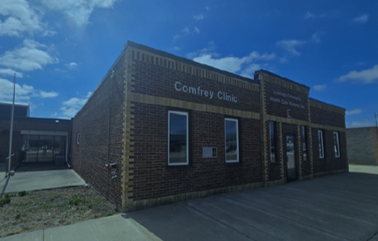
Tucked in between rows of corn and soybean fields in southwestern Minnesota, Comfrey’s population has hovered just below 400 residents for decades. In 1998, an F4 tornado tore through town. “We were just your typical small rural southwest Minnesota community,” says Mayor Gary Richter. “Our main street had abandoned buildings, even the occupied ones were over 100 years old.” The tornado destroyed 75% of businesses and homes in town. One of the buildings it severely damaged had regional notoriety – it was at one time the smallest hospital in the state. The former hospital site was eventually rebuilt and served the city with a variety of health care-related services for years but finally closed its doors for good in 2021. To Mayor Richter, repurposing the site was critical to maintaining viable commercial space in the center of town.
The city’s Economic Development Authority (EDA) acquired the property in 2024 in the hopes of bringing it back into future use. “When the EDA initially invested in the building, it probably didn’t look beneficial at the moment,” said Richter. “Not every brick building is in good shape, but this one was.” The building had been taken care of and could be a real asset to the town, they just needed to understand potential environmental concerns after years of commercial use, in addition to risks from nearby petroleum leaks and old underground storage tanks.
While attending a Region 9 meeting, Mayor Richter heard Minnesota Pollution Control Agency (MPCA) staff speak about brownfields, and resources available to investigate them, and he immediately thought of the former hospital site. When it comes to redeveloping brownfields, Mayor Richter believes “you need a ton of patience – you will get frustrated many times – but that’s all part of the process.”
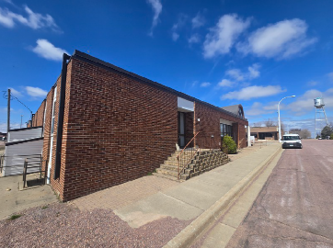
The city applied to the MPCA Brownfield Assessment Grant and was accepted into the program in 2026. “We’ve gotten a lot of grants over the years and some of them are simple, but the MPCA grant is the simplest a grant it can be,” said Richter. “It is unbelievable the amount of work done through the MPCA grant. An abandoned or vacant building is 100% negative, but this grant has shown us the potential here. You can assume the worst, but we don’t have to assume things anymore. There are documents and pictures generated through the investigation. The city never would have spent one hundred dollars doing these things, let alone thousands, but the MPCA grant covered the whole thing.”
“Thanks to this program, we now know what we have in terms of structure and everything related to it,” says Richter. “This will help us move forward to decide what the next steps will be to refurbish the building back to a usable structure on main street.”
The MPCA Brownfield Assessment grant is available for small towns, Tribal Nations, nonprofits and emerging developers. Applications are accepted on a rolling basis – funding rounds take place 4 times a year. Contact MPCA Brownfield staff with questions: brownfieldgrants.mpca@state.mn.us or 651-757-2904.